Vagabond, A Review
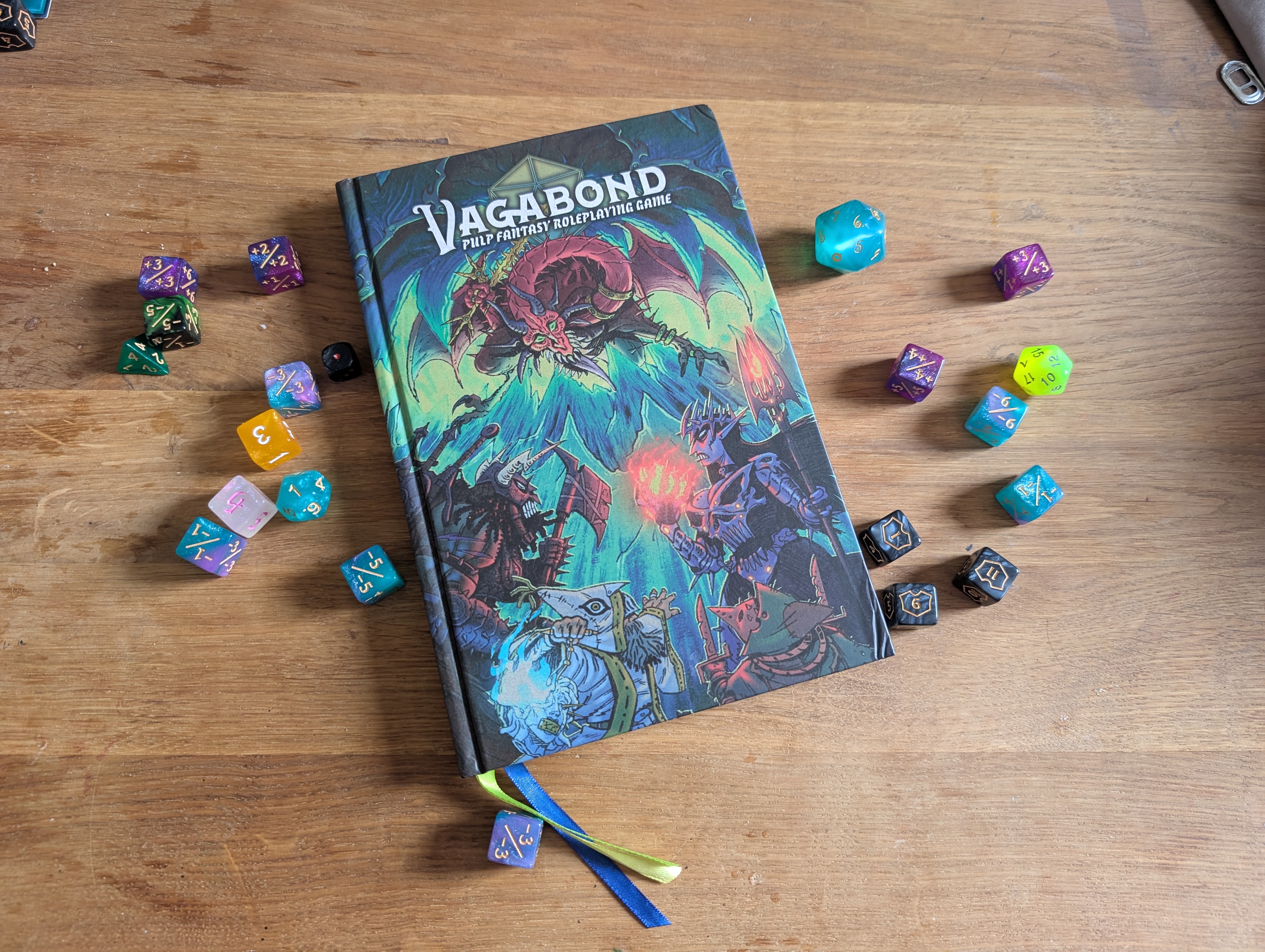
Vagabond is a tabletop RPG created by Land of the Blind. A D20 system and styled as a pulp-inspired adventure game, it manages to pack an impressive amount of depth into a relatively small core rulebook.
After GMing a few sessions, I came away genuinely surprised by how polished the system feels for such a new game. Character creation is straightforward without feeling shallow, magic feels creative and personal, and dungeon design is fast enough that preparation rarely becomes a chore. While the system certainly has a few rough edges, the overall experience left a very positive impression.
Mechanics
One of Vagabond’s most interesting features is its fixed-target skill check system. Rather than the GM secretly deciding target numbers for every action, players always know what number they need to roll. On paper this might sound like it removes some tension, but in practice I found it greatly improves the flow of the game and reduces the mental load on the GM.
There’s no more stopping the game to ask:
“I rolled a 15 — does that succeed?”
Instead, players already know whether they passed or failed. This keeps the pace moving and lets the GM focus more on storytelling and improvisation rather than constantly referencing numbers behind the screen.
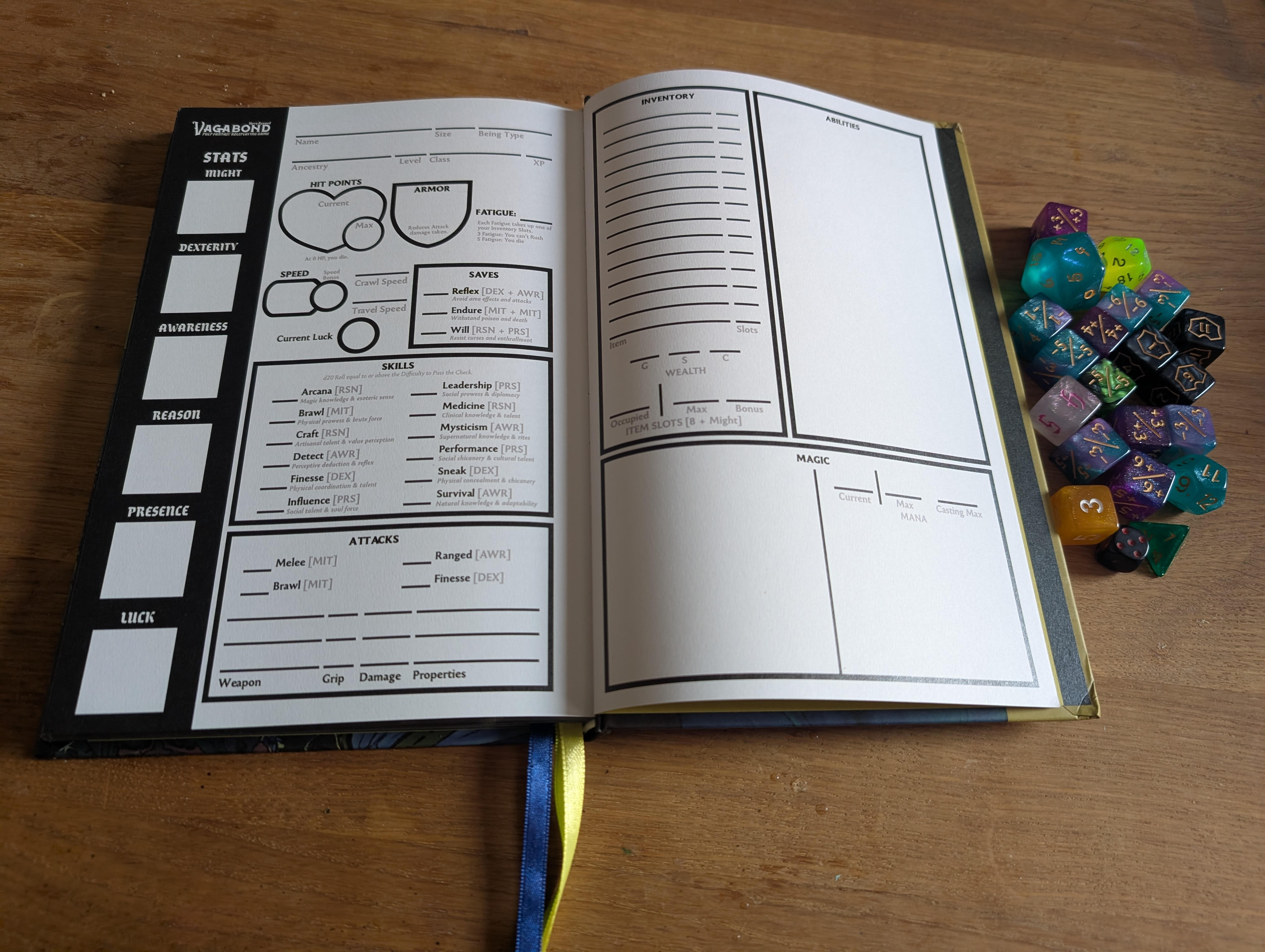
The system works by lowering the number required to succeed based on your character’s abilities. For example, a character’s Finesse score is determined by subtracting their Dexterity from 20. If the character is trained in the skill, they subtract double their Dexterity instead.
So a character with 5 Dexterity would need:
- 15 or higher if untrained
- 10 or higher if trained
It’s a simple mechanic, but one that works well though sometimes may force some stats to the forefront as they determine critical skills all characters want.
Beyond the skill system, Vagabond includes a wide range of classes and “perks,” which function similarly to feats in other D20 systems. Familiar archetypes like the Rogue and Wizard appear alongside more unusual options such as the Dancer and Merchant.
The class variety feels reminiscent of classic JRPGs like Final Fantasy, giving the game a nostalgic charm while still offering plenty of mechanical flexibility. Between the classes and perks, character builds feel diverse and every advancement choice feels significant.
Magic
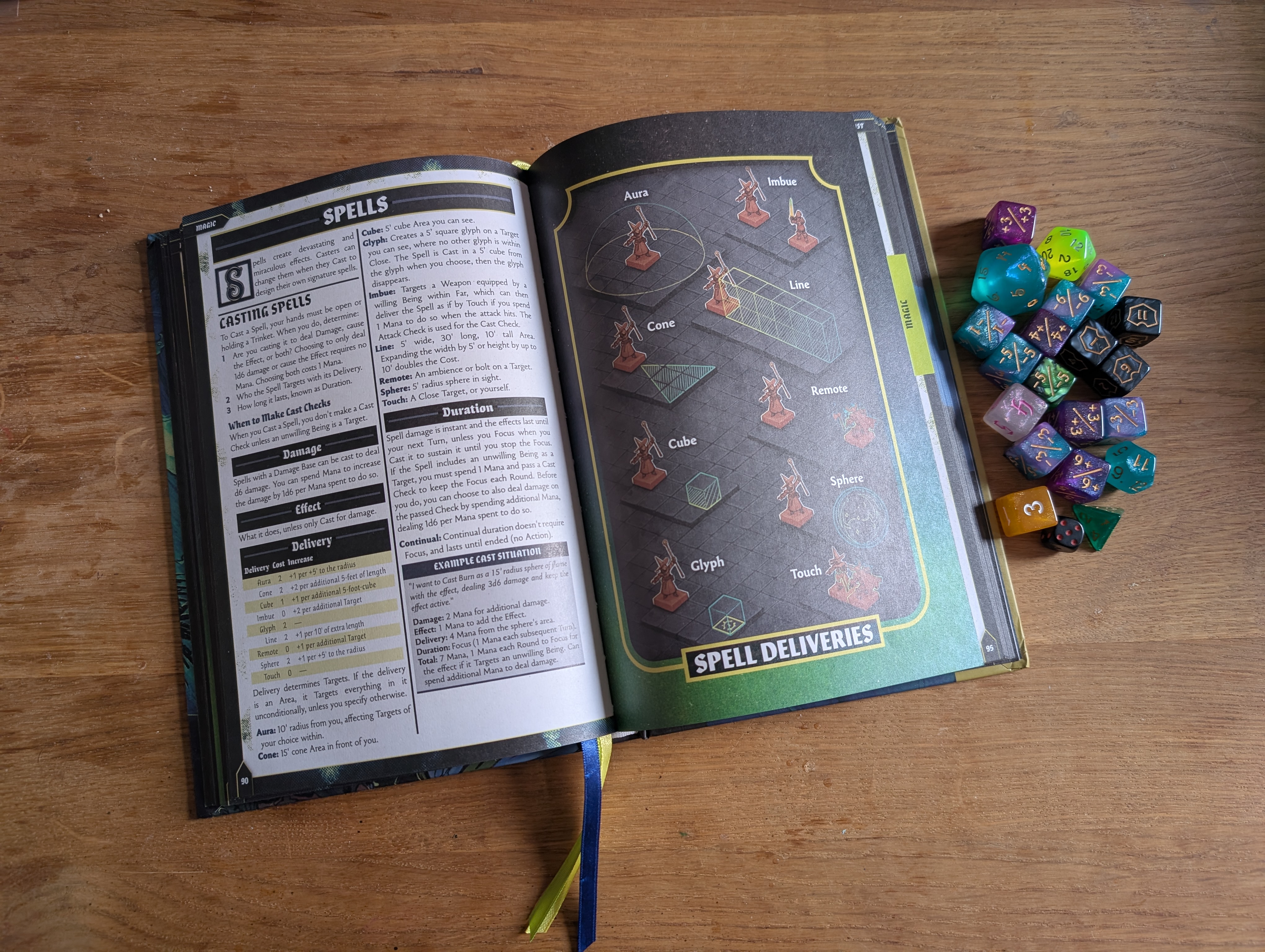
The spellcasting system is one of Vagabond’s standout features. It reminded me somewhat of the Words of Power system from Pathfinder 1st Edition, allowing players to construct spells from modular components.
Rather than simply selecting a predefined spell, casters decide:
- The spell’s area of effect
- Whether it is sustained
- What effects it produces
Larger areas and stronger effects require more mana investment, and because mana is limited, casters constantly make meaningful choices between huge dramatic spells and smaller, more efficient magic.
Overall, the system feels far more natural and flexible than traditional Vancian casting systems, encouraging creativity rather than memorization.
Rough Points
Despite enjoying the system overall, there are a few mechanics that felt underdeveloped during play.
Favour and Hinder
Vagabond uses a mechanic called Favour and Hinder to represent advantage and disadvantage. A favoured character adds a d6 to their checks, while a hindered character subtracts a d6.
The idea itself is excellent, but in practice we found it too easy to stack favourable situations. Eventually we ended up house-ruling the mechanic into multiple levels of Favour and Hinder with scaling bonuses. This encouraged players to think more tactically instead of simply flanking an enemy and calling it a day.
Uneven Choices
While many perks feel exciting and impactful, a handful feel noticeably weaker than the rest. It never completely broke the experience, but there were definitely moments where certain options felt like obvious traps compared to stronger alternatives.
Summary
Vagabond is a genuinely promising RPG that I fully intend to continue playing with my group. Its streamlined mechanics, creative magic system, and strong class identity make it stand out from many newer indie systems.
While there are areas that could benefit from further refinement, the foundation is extremely solid. I’d be very interested to see where the game evolves from here — especially if a future second edition smooths out some of the rougher mechanics.
Pros
- Fast and intuitive GMing tools
- Excellent class variety and character customization
- Creative and flexible spellcasting system
- Strong nostalgic JRPG-inspired atmosphere
- Compact rulebook with surprising depth
Cons
- Favour/Hinder can become too easy to exploit
- Some perks feel underpowered compared to others
- Fixed target numbers may reduce tension for some groups